

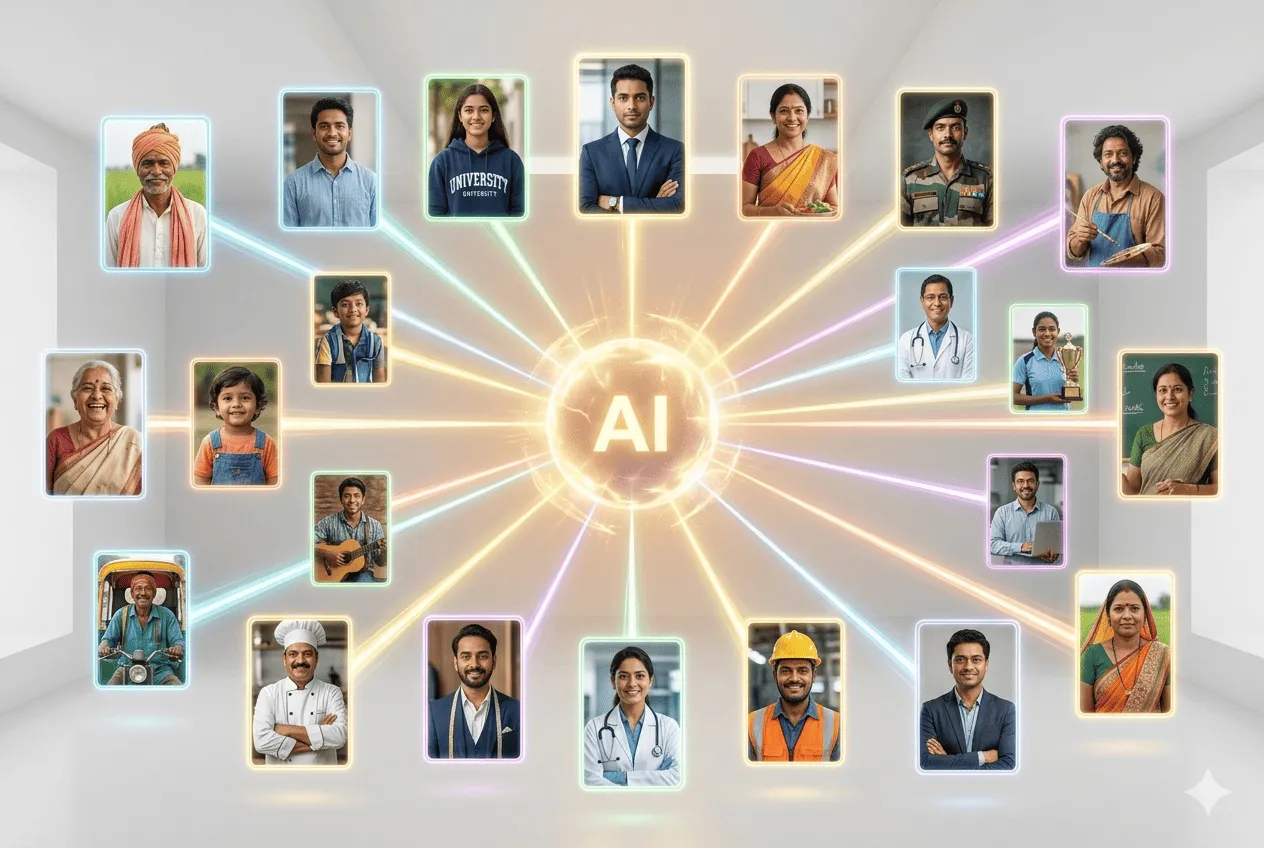
Personalization Is No Longer a Bonus
There was a time when personalization felt like an extra feature.
Nice to have, but not necessary.
That time is gone.
Today, users expect things to feel tailored. Not in a flashy way, just in a way that makes sense for them. If something feels too generic, it stands out immediately, and not in a good way.
People notice when:
- Answers feel copied
- Responses don’t match their situation
- They have to adjust information themselves
That disconnect creates friction.
And when friction shows up too often, users leave.
The Problem With Surface-Level Personalization
A lot of platforms claim to be personalized.
But what they actually do is very basic.
They might remember a name.
They might suggest content based on past activity.
That’s useful, but it’s not enough.
Real personalization goes deeper.
It’s about how information is delivered, not just what is shown.
A beginner should not receive the same explanation as an expert.
A returning user should not go through the same steps as a new one.
If the experience doesn’t adapt, it feels static.
Why One Experience No Longer Works
Users come with different expectations.
Some want quick answers.
Some want detailed explanations.
Some are exploring.
Some are ready to act.
Trying to serve all of them with a single approach creates gaps.
A multi-persona system addresses this by adjusting responses based on context.
That flexibility is what makes personalization effective.
Making Interactions Feel Relevant
Relevance is at the core of personalization.
If a response feels aligned with the user’s need, the interaction feels smooth.
If not, it creates confusion.
A Multi-Persona AI Platform for All Your Questions improves relevance by adapting:
- Tone
- Depth
- Structure
This makes each interaction feel more useful.
Reducing Effort for the User
Users don’t want to work hard to get answers.
They don’t want to filter through unnecessary details.
They want clear, direct responses.
A multi-persona approach reduces effort.
It delivers answers that already match the user’s need.
This makes the experience faster and easier.
Personalization Improves Engagement
When interactions feel personalized, users stay engaged.
They ask more questions.
They explore more.
If responses feel generic, engagement drops.
A multi-persona system improves engagement by making interactions more relevant.
This keeps users involved.
Improving Retention Through Better Experiences
Retention is closely tied to experience.
If users feel supported, they return.
If they feel frustrated, they leave.
Personalization plays a big role here.
A multi-persona approach improves retention by making interactions smoother.
Users are more likely to come back.
Supporting Different Stages of the User Journey
Personalization is not just about the user.
It’s also about where they are in their journey.
A new user needs guidance.
An experienced user needs speed.
A multi-persona system adapts to these stages.
This keeps the experience consistent.
Making Self-Service More Effective
Self-service often fails because it feels too generic.
Users have to search and interpret information.
A multi-persona system improves this.
It allows users to ask questions and get answers that fit their situation.
This makes self-service more useful.
Aligning With Changing Expectations
User expectations are evolving.
People expect systems to understand them better.
Insights from Trends in Artificial Intelligence show a shift toward adaptive and context-aware systems.
A multi-persona approach aligns with this trend.
It meets modern expectations.
Supporting Internal Personalization
Personalization is not just for customers.
Internal teams benefit from it too.
Employees need answers in different formats.
A multi-persona system supports this.
It improves internal workflows.
Scaling Personalization Without Complexity
Providing personalized experiences at scale is challenging.
Manual approaches do not work.
A multi-persona system solves this.
It adapts automatically.
This allows businesses to scale personalization.
Reducing Friction Across Interactions
Friction often comes from mismatched responses.
Too much detail.
Too little clarity.
A multi-persona approach reduces this.
It aligns responses with user needs.
Role of Development Expertise
Building personalized systems requires expertise.
Many AI Development Companies are focusing on creating adaptive solutions.
These systems are designed to understand user behavior.
This improves performance.
Why This Shift Matters
Personalization is becoming a standard.
Users expect it.
Businesses that fail to provide it risk losing engagement.
A multi-persona approach helps meet this expectation.
The Bigger Picture
The way users interact with platforms is changing.
They want systems that adapt to them.
Not the other way around.
What It All Comes Down To
Personalization is about making things easier.
Clear answers. Relevant responses. Smooth interactions.
A Multi-Persona AI Platform for All Your Questions makes this possible by adapting to user needs.
And in the age of personalization, that adaptability is what truly matters.

