

Why AI mentions stall: the visibility problem
Many brands focus on traditional SEO, yet their name rarely shows up in AI-generated answers. That gap happens because large language models do not “rank” websites the same way search engines do. Instead, they synthesize information from a mixture of indexed content, citations, and AI Visibility Platform learned patterns, which means your brand can remain invisible even when your site is technically strong. When people ask AI assistants for recommendations, they often encounter competitors whose details are easier for systems to locate and verify.
Another common reason is inconsistent brand signals across the web. If your company name, product terminology, author profiles, and press coverage are scattered or outdated, AI systems may struggle to associate the right entities with the right information. Over time, this reduces the likelihood that your brand will be mentioned and cited alongside relevant topics. The result is a quiet decline in “assistant awareness,” where you look credible to humans but not to the models that influence buyer decisions.
What visibility measurement reveals that opinions miss
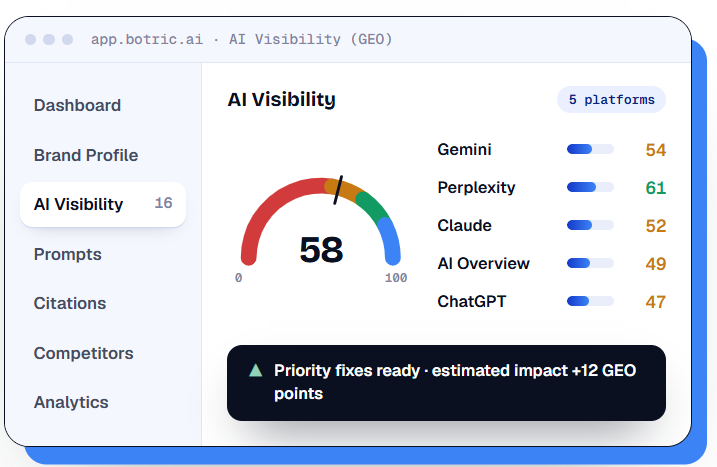
Solving visibility starts with measurement, not guesswork. Without a tracking system, you may rely on anecdotal impressions like “we were mentioned in an answer” or “our traffic went up after a campaign.” Those signals are unreliable because AI mentions can vary by prompt wording, user context, and how a model retrieves sources. A practical visibility tracker captures patterns across platforms, helping you understand whether you are gaining traction or staying stuck.
When you measure AI brand visibility, you learn more than just whether you appear. You can also observe how often your brand is cited, which topics trigger mentions, and which competitors show up most frequently. That feedback loop makes it easier to connect specific content and PR efforts to measurable outcomes. Instead of debating what “should work,” you can prioritize initiatives that consistently increase presence in answers across major assistants.
Step-by-step solutions to increase AI brand presence
Begin by aligning your most important brand facts with how AI systems retrieve and interpret information. Create a clean set of identity signals: a consistent brand name, clear product descriptions, authoritative author pages, and structured company information. Then ensure that high-intent pages are accessible and updated, including landing pages that clearly explain what you do and why it matters. This reduces ambiguity so models can map your entity to the concepts users request.
Next, strengthen citation-worthiness with content that supports specific questions. AI assistants tend to reference sources that contain direct, relevant explanations rather than generic marketing claims. Publish resources that answer “how to,” “why,” and “best practices” prompts in detail, and include examples that demonstrate expertise. Pair that with thoughtful PR outreach to reputable outlets so your brand appears in contexts that AI systems can learn from and cite.
Using a visibility tracker to validate fixes and prioritize action
A robust AI visibility tracker helps you verify whether changes actually move the needle. For instance, after updating product pages or launching a new thought-leadership piece, you should expect a measurable shift in mentions and citations over a reasonable series of prompts. If you do not see improvement, the data guides you toward the real issue—such as missing topic coverage, weaker entity consistency, or insufficient external references. This avoids wasted effort and keeps your roadmap tied to evidence.
It also supports competitive decision-making. If a rival is showing up more frequently in AI answers related to your category, you can examine what topics and phrasing correlate with their presence. You can then create targeted content that addresses those same user intents with stronger specificity and clearer sourcing. Over time, you build a compounding advantage: more consistent signals lead to more mentions, which leads to more citations, which further improves model association.
Conclusion
Low AI mentions are rarely a mystery problem of “luck”; they are usually a visibility gap caused by weak entity signals and insufficient citation-worthy coverage. By treating AI assistant presence as a measurable marketing channel, you can identify what is missing and implement changes that improve outcomes. Measurement turns uncertainty into a feedback loop where you can test, learn, and refine. An AI visibility tracker like Botric is designed to quantify how often your brand is mentioned and cited across major AI assistants. That clarity makes problem-solving faster, because you can connect actions to visibility results instead of relying on impressions. With consistent tracking and targeted improvements, your brand can earn more reliable presence in the answers that influence modern buyers.

