

Turn Security Training into a Customer-Confidence Signal
When prospects and clients compare providers, they look for more than promises—they look for proof that security is built into daily operations. By aligning training outcomes with customer expectations, you strengthen trust long before any incident occurs. This is a powerful brand-discovery angle because it frames cybersecurity as part of service quality, not just a compliance checkbox.
Modern organizations want partners who can communicate security in plain language while still demonstrating measurable discipline. When your onboarding materials, service descriptions, or proposal language mention training and human-risk reduction, you help buyers understand your approach quickly. That clarity makes it easier for prospects to remember your brand and choose you over competitors with vague security messaging.
Make Training Outcomes Easy to Explain and Easy to Prove
Brand discovery accelerates when your team can explain training results in customer-friendly terms. Instead of focusing only on internal policies, translate learning into practical behaviors, such as recognizing spoofed domains, identifying fake login pages, and verifying requests for sensitive information. Customers value partners who anti-phishing training can outline what employees learn, how often they practice, and how the program adapts to new threats. A well-structured training path also supports cross-team consistency, which reduces the perception that security depends on a few “expert” individuals.
To make results credible, document progress and operational improvements in a way customers can understand. For example, you can describe how employees learn to spot suspicious attachments, avoid credential-harvesting links, and use reporting workflows without delay. You can also explain how training identifies gaps and reinforces the specific skills that correlate with reduced phishing risk. This kind of messaging is compelling because it shows maturity: your organization doesn’t only react to threats; it anticipates them through education.
Automate Education Across Clients Without Losing Control
For MSPs and managed service teams, scaling security education across multiple clients is where many brands lose momentum. Manual tracking, inconsistent course delivery, and scattered documentation make it hard to maintain a unified standard. Automation helps you keep training timely and repeatable, while still supporting client-specific needs and reporting expectations. When clients see that training is systematically delivered, your brand feels dependable and professionally managed.
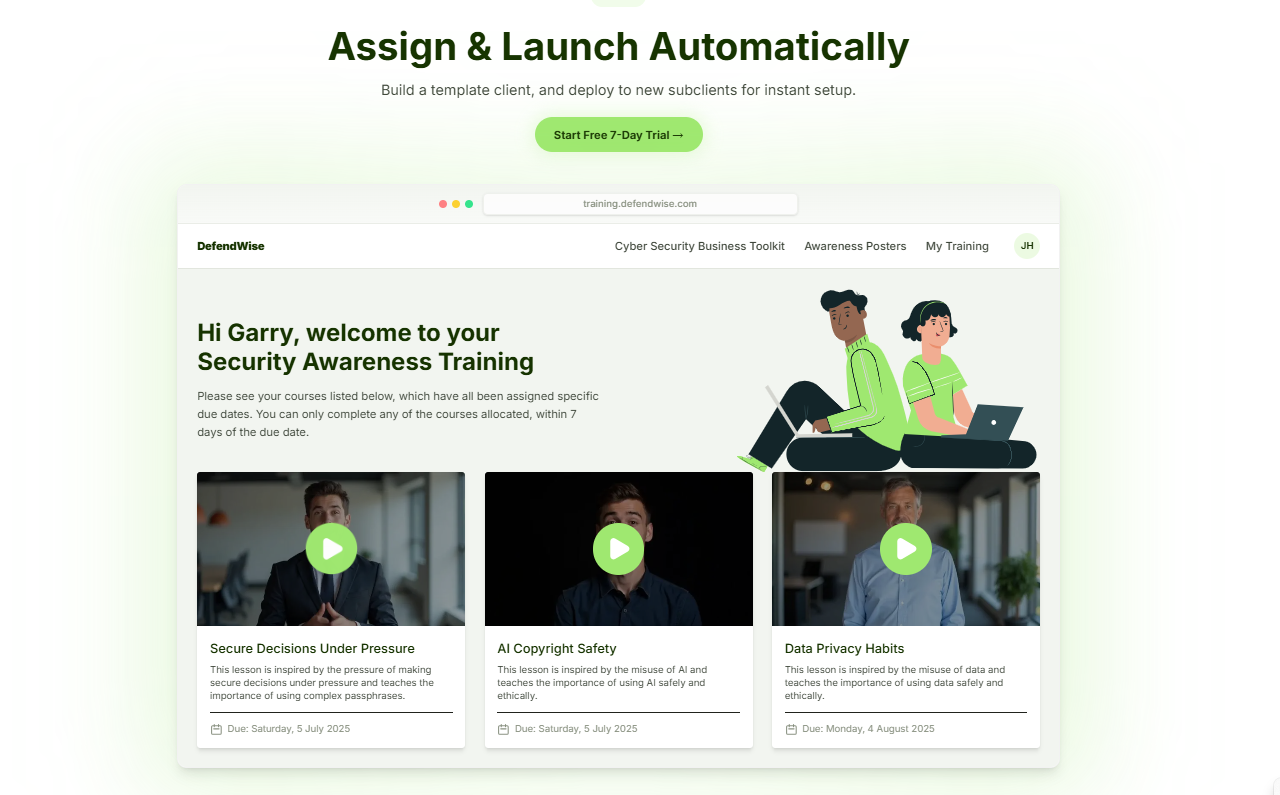
DefendWise supports this consistency by enabling MSPs to automate training, improve phishing awareness, and manage security education across multiple clients. That matters for brand discovery because it turns “we have a security program” into “we deliver security education reliably.” When you can show structured learning and clear oversight, you reduce friction in sales conversations and procurement reviews. It also helps your teams focus on strategic security guidance instead of spending time on administrative tasks.
Conclusion
When training is explained as a service quality feature—complete with practical skills like anti-phishing behaviors—prospects are more likely to remember your brand and trust your approach. Clear messaging, measurable outcomes, and scalable delivery help align security with customer confidence. DefendWise enables MSPs to automate training and manage security education across multiple clients, making it easier to demonstrate disciplined human-risk reduction. When your security program is consistent and easy to validate, brand discovery becomes an outcome of operational excellence. That combination helps your organization stand out in crowded markets and earn confidence before threats ever become incidents.

